




|
Quantity
|
Total
|
||
|
|
|||
|
|
|||
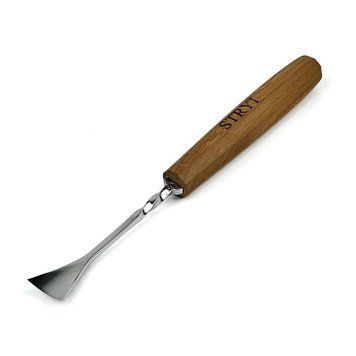
30 mm Wood Carving Gouge — a working tool for precise carving
Wood carving doesn't always need a miniature tool. When you have volume to remove, a background to shape or a fairly wide surface to work, a narrow blade slows things down noticeably. In cases like these, a 30 mm wood carving gouge lets you move confidently across large areas while keeping control of the cut direction.
A tool this size suits relief carving, decorative panels, working furniture parts, boxes and other pieces where large areas gradually give way to more complex relief. That said, a single 30 mm gouge doesn't have to do absolutely everything. Its strength is precisely the mid-to-wide areas — pre-shaping a surface and clearing material neatly.
Where a 30 mm gouge is especially useful
One of the handiest jobs for a wide blade is removing wood around the future relief. Instead of many short passes, you can work a larger area in sequence, leaving the margin you need for later detailing. A 30 mm wood carving gouge also works for forming transitions between relief and background, cleaning up wide hollows and leveling individual surfaces. And a well-sharpened edge lets you take off not just heavy shavings but fairly fine ones too.
The wood itself matters as well. Soft species cut more easily, so here it's especially important to control the depth of the pass. With hard wood, edge sharpness and tool stability count for more. Trickier still are areas where the grain direction changes: with the wrong movement, the wood can chip even under a sharp blade.
Before you start, it's worth assessing a few things:
- the cutting edge should be even and free of nicks, or movement through the wood becomes less predictable;
- blade stiffness matters on hard species and when working with noticeable force;
- the handle should sit securely in the hand and let you change direction precisely;
- the tool's balance affects control and fatigue over a long carving session;
- the state of the edge determines how much effort a clean cut takes.
Keep the tool's purpose in mind when choosing your technique: a wide blade is most effective on surfaces and large elements. So a 30 mm wood carving gouge is especially valuable in operations where you need to remove excess material in sequence and prepare a base for finer work.
How to keep the tool precise and long-lasting
In wood carving, a sharp edge matters no less than the carver's technique. A dull blade forces you to press harder on the handle, raises the risk of an uncontrolled movement and can leave a torn mark. A sharp 30 mm wood carving gouge works far more calmly: you can adjust the cut depth with a small change of angle and pressure.
After use, it's best to clean the wood dust off. Store it so the cutting edge doesn't touch other metal objects. Touching up the edge periodically keeps the tool in working order without a full re-grind every time. Don't use a 30 mm carving gouge as an all-purpose fitting tool — striking it with a metal hammer, prying at parts or working unsuitable materials quickly damages the edge. For struck work, use a proper mallet and the technique the tool's build is designed for.
When buying, it makes sense to judge how well the gouge fits your own way of working. One carver values a soft, controlled cut; another wants stiffness for hard wood. The clearer your future tasks, the easier it is to choose a tool you'll actually reach for again and again.
The STAMESKI catalog carries gouges for different kinds of woodwork. A 30 mm wood carving gouge is a practical addition to the workshop when you need confident work on wide areas, neat material clearing and the option to move gradually from rough shaping to forming relief. Orders ship worldwide.