






|
Quantity
|
Total
|
||
|
|
|||
|
|
|||
Leather Knives – Clean Cuts, Precise Skiving and Better Control
Leather rewards precision. A blade that drags, tears, or requires excessive pressure can distort the material before the actual project has even begun.
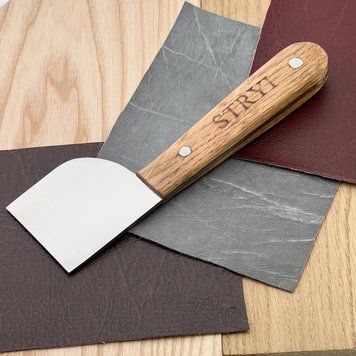
STRYI Leather Knives are designed for accurate cutting, trimming, and skiving in leathercraft. Different blade geometries allow you to choose the right tool for long straight cuts, curves, thinning edges, or detailed work instead of forcing one knife to perform every operation.
The range includes skiving knives, head knives, round knives, half-moon knives, and precision leather cutting knives for both professional workshops and individual leathercraft projects. These same tool types are represented in STRYI’s current English-language range.
Whether you are making belts, wallets, bags, cases, footwear, or custom leather goods, the right knife gives you greater control over the cut and helps reduce unnecessary material waste.
Which Leather Knife Do You Need?
Different stages of leatherworking require different cutting actions.
- Skiving knives – designed to thin leather edges, reduce bulk at folds and seams, and create smooth tapers before assembly.
- Head knives – versatile leatherworking knives for cutting, trimming, and shaping larger pieces of leather.
- Round knives – curved blades that can roll through long straight cuts and pivot smoothly through curves.
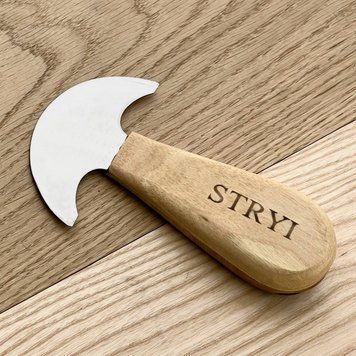
- Half-moon knives – useful for cutting, paring, shaping, and working along both straight and curved lines.
- Precision leather cutting knives – suited to smaller components, detailed cuts, trimming, and controlled edge work.
STRYI’s round/half-moon knife, for example, is intended for straight and curved leather cutting as well as thinning work, while the Japanese-style skiving knife is designed specifically for controlled edge thinning.
Cutting vs. Skiving
These are two different jobs, and using the right blade makes both easier.
A leather cutting knife needs to move through the material cleanly without pulling or bunching it. For large patterns and long cuts, a round or head knife provides a broad cutting edge and allows a smooth rolling motion.
A skiving knife removes thickness rather than simply separating the material. It is used to taper edges before folding, reduce bulk where layers overlap, and prepare clean joints and seams.
In simple terms:
Cutting knife = separates the material.
Skiving knife = reduces its thickness.
Round or head knife = handles long cuts and curves efficiently.
For a workshop that performs several types of leatherwork, having separate cutting and skiving knives is usually more efficient than relying on one universal blade.
How to Choose a Leather Knife
Start with the work you perform most often.
Blade Shape
For long straight and curved cuts, consider a round knife, head knife, or half-moon knife. For thinning edges and preparing seams, choose a skiving knife. Smaller cutting knives provide more control for detailed patterns and compact parts.
Blade Steel
A leather knife needs a very sharp edge because leather can quickly expose weaknesses in poorly prepared steel. STRYI uses high-carbon tool steel across its current professional leatherworking knife range, with individual models specifying their steel and hardness characteristics.
Handle and Control
The handle should allow you to maintain a stable cutting angle without excessive grip pressure. This becomes especially important during long cutting or skiving sessions, where small changes in blade position can affect the finished edge.
Sharpening
A sharp knife requires less force and gives you greater control. STRYI leatherworking knives are supplied professionally sharpened, while regular stropping helps maintain the cutting edge between full sharpenings.
Why Choose STRYI Leather Knives?
A professional leather knife should not make you fight the material. Its job is to make the cut predictable.
STRYI leather knives offer:
- specialized blade geometries for cutting, skiving, trimming, and shaping;
- high-carbon tool steel for reliable edge performance;
- professional sharpening before the tool reaches your workshop;
- ergonomic hardwood handles for secure control;
- options for both straight and curved cutting;
- dedicated tools for edge thinning and skiving;
- knife styles suited to both detailed leathercraft and larger cutting jobs.
Instead of choosing a knife simply by size, match the blade geometry to the operation you perform most often.
Build the Right Leatherworking Knife Set
One leather knife can cover several operations, but no single blade geometry is ideal for everything.
A practical workshop combination is a round or head knife for general cutting together with a skiving knife for thinning edges. A smaller precision knife can then handle detail work, internal cuts, and final trimming.
With the right combination, you can move from pattern cutting to edge preparation and final fitting with greater control — and spend less time correcting cuts later.