



|
Quantity
|
Total
|
||
|
|
|||
|
|
|||
Flat Bent Chisels – Reach Flat Surfaces a Straight Chisel Cannot
Some carving areas need a flat cutting edge, but a straight chisel simply cannot approach them at the right angle. Recessed backgrounds, inside surfaces, deep relief, and areas surrounded by raised carving can all limit the movement of a conventional straight tool.
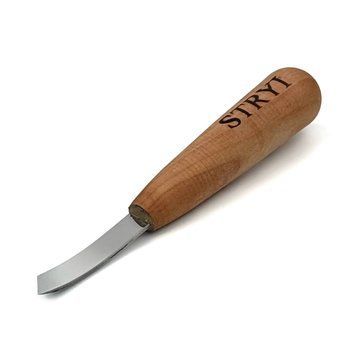
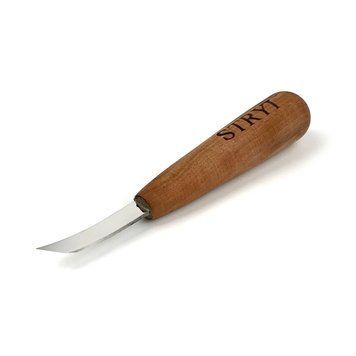
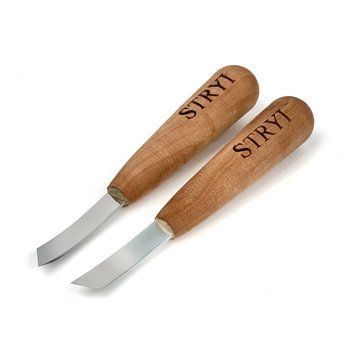
STRYI Flat Bent Chisels combine a flat cutting edge with a bent shank. This geometry gives the blade extra clearance, allowing the cutting edge to reach below surrounding surfaces while keeping the handle out of the way.
Unlike a bent gouge, which has a curved cutting edge for hollowing, a flat bent chisel is designed to pare, level, trim, and refine relatively flat or gently curved surfaces in hard-to-reach areas. It gives the carver more control where maintaining a clean plane is just as important as reaching the cut.
Where Flat Bent Chisels Work Best
The bent shape becomes especially useful when the surface you need to cut sits lower than the surrounding wood.
Flat bent chisels are well suited for:
- leveling recessed backgrounds in relief carving;
- cleaning flat areas inside deep or enclosed sections;
- refining transitions between different levels of a carving;
- removing small ridges and tool marks after rough shaping;
- paring surfaces where the handle of a straight chisel would contact the workpiece;
- working on furniture details, decorative panels, sculptural carving, and restoration projects;
- creating cleaner finishing cuts before sanding or final surface treatment.
For relief carving in particular, the flat edge allows the tool to follow the background without creating the rounded channels that a gouge would leave behind.
Why Choose STRYI Flat Bent Chisels?
For this type of tool, geometry is critical. The bend must provide enough clearance without reducing control, while the edge needs to stay flat and sharp throughout the cut.
- Flat cutting edge – designed for leveling, paring, and refining surfaces rather than creating a hollow.
- Bent shank geometry – reaches recessed areas where a conventional straight chisel loses its working angle.
- Professional tool steel – provides durability, wear resistance, and reliable edge retention during regular carving work.
- Ready to carve – STRYI chisels are professionally sharpened and honed before leaving the workshop.
- Clean, controlled cuts – a properly prepared edge helps reduce torn fibers and unnecessary finishing work.
- Ergonomic hardwood handle – provides a secure grip and better control during precise carving.
- Different blade widths – choose a narrow chisel for detailed areas or a wider blade for faster background leveling.
STRYI’s current professional carving tools use hardened carbon steel, oak handles, reinforced ferrules, and workshop sharpening before shipment.
How to Choose the Right Flat Bent Chisel
The most important factor is blade width.
A narrower flat bent chisel gives you greater control when cleaning small recesses, working between raised elements, or refining detailed relief. Wider blades cover more surface with each pass and are better suited to leveling larger backgrounds and broad recessed areas.
The depth and position of the bend are equally important. The advantage of a flat bent chisel appears when a straight tool cannot maintain the correct cutting angle without the shank or handle touching the surrounding carving.
In practical terms:
Narrow blade = more precision.
Wide blade = faster surface leveling.
Bent shank = better access to recessed areas.
Built for Precise Relief Carving
Flat bent chisels are not intended to replace straight chisels or bent gouges. They solve a specific problem: keeping a flat cutting edge working cleanly when the surface is difficult to reach.
That makes them particularly valuable for relief carvers, furniture makers, sculptors, restorers, and other woodworkers who need clean backgrounds, controlled transitions, and precise finishing in complex forms.
With the right blade width, a STRYI Flat Bent Chisel helps you spend less time correcting difficult areas and more time controlling the final shape and surface of the carving.